




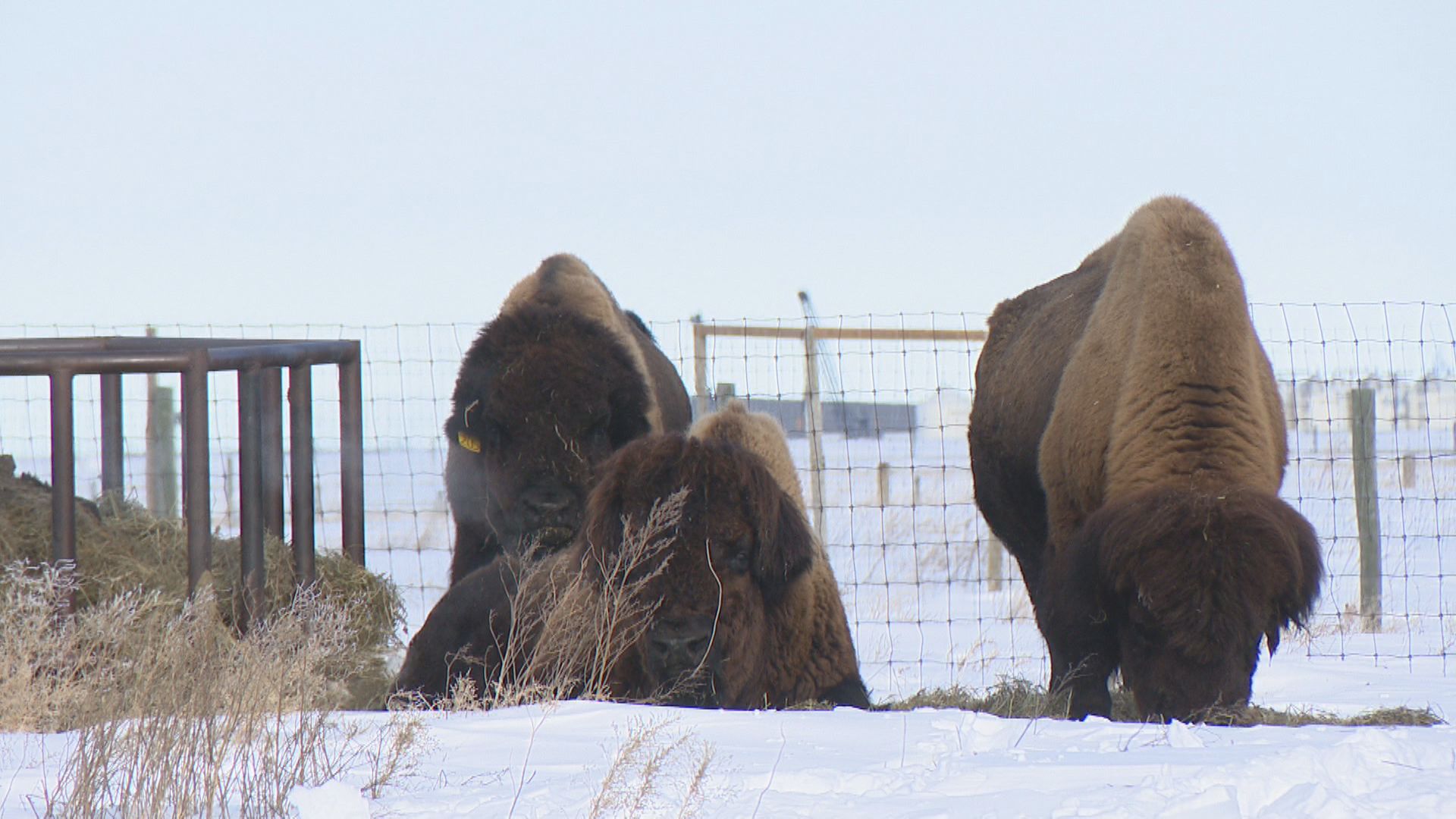
Researchers from the University of Saskatchewan are conducting a new study to develop ways of bison breeding and grazing that are different from beef cattle.
Bison are being reintroduced into the province in many ways, but not much research has gone into them and the way they are currently managed is the same as cattle. Being two completely different animals, researchers say bison deserve their own research.
“First when we started looking for information in the literature about bison nutrition, bison grazing management, it was very hard for us to find good scientific-based information,” says Eric Van Cleef, Livestock and Forage Centre of Excellence research associate who will be working on the study with Scott Wright, LFC director.
“These aren’t just animals, these are the ancestors to the people,” Wright added. “And so, we really want to honour that.”
They will be conducting this research project by comparing controlled grazing versus open grazing.


Get daily National news
Get the day’s top news, political, economic, and current affairs headlines, delivered to your inbox once a day.
“We are going to have continuous grazing systems where the animal stays all the time in the same pasture. In the other system we have the rotational grazing, where the animals go through paddocks as soon as they need more food,” said Van Cleef.
Wright elaborated, “It allows us to come back and actually bring data that shows the impact on the land, on the microbiology, on the plants and on the animals.”
Researchers will analyze and study the environment, behaviours and well-being of the bison over the next two years to determine the best techniques and grazing methods.
“How do we make sure that these… creatures contribute to the long-term sustainability of the land they’re on, right, and it allows people to make choices quite frankly, it allows them to understand,” said Van Cleef.
“How to best bring these animals forward for their wellness and their opportunity.”
Researchers are working with Indigenous communities on the project, saying it’s important to include Indigenous knowledge as they have worked with bison for thousands of years.
“First Nations and Indigenous folks have talked to us about wanting to really begin to underline and understand that interaction of the animal with the land,” said Wright.
“There is traditional knowledge from thousands of years of understanding how these animals interact, but what we find is that a thousand years ago, these bison would travel a thousand miles. Today, we have fences around them.”
Watch above for more on how this research project will benefit Saskatchewan.
© 2026 Global News, a division of Corus Entertainment Inc.