







What may start as a calm drive out of the Okanagan Valley can quickly turn dangerous once winter conditions take hold.
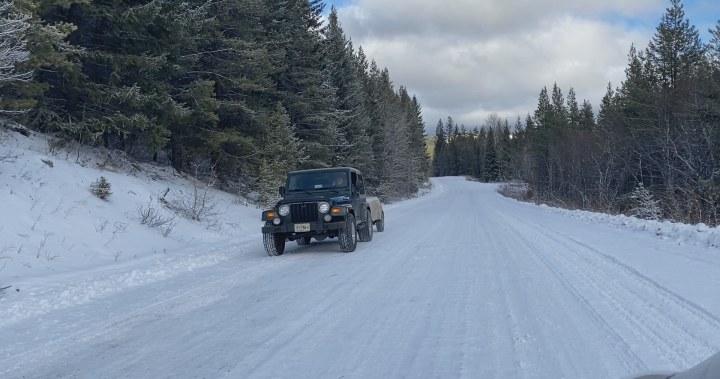
Central Okanagan Search and Rescue (COSAR) was called out this week to Bear Lake Main Forest Service Road after a driver became stuck in snowy, icy conditions, a scenario rescuers say is becoming increasingly common this time of year.
“You think it’s a nice sunny day in the valley, then you go out there and get caught in fog or icy conditions,” said Duane Tresnich with Central Okanagan Search and Rescue.
“There’s a thin layer of ice under the snow, and you can easily slip into a ditch and get stuck.”
In a surprising twist, COSAR says it was the same driver who required assistance from the same location just over a week earlier. This time, however, rescue crews were informed help was no longer needed.
“We were informed by the RCMP that he had managed to get himself unstuck with the help of some passersby and had returned home and notified us that he was OK,” Tresnich said.


Get daily National news
Get the day’s top news, political, economic, and current affairs headlines, delivered to your inbox once a day.
As winter weather settles into higher elevations, tow truck operators are also getting busy this time of year.
“A lot of people just don’t have the right equipment at this time of year,” said Marlon Fagan, owner of EnviroMetal Towing. “They aren’t set up and aren’t expecting winter conditions up in the mountains.”
Fagan says proper preparation is critical when drivers may encounter several feet of snow, adding that simple, affordable equipment can make a big difference.
“One thing I would suggest for anyone going into the backcountry is tire tracks, they’re traction mats and they’re very affordable,” he said.
Driving up Bear Lake Main FSR, conditions change quickly. Snow blankets the roadway, temperatures drop significantly compared to the valley floor, and cellphone service becomes unreliable, all factors that can complicate a rescue if something goes wrong.
That’s why COSAR is reminding motorists that help can take time to arrive.
“As volunteers, it takes us time to get there,” Tresnich said. “Make sure you have food, water, communication if you can, radios, phone activation, and a way to start a fire. That’s very important.”
Sunday’s incident marked COSAR’s 101st rescue task of the year, a number rescuers say highlights the importance of preparation before heading into the backcountry.
© 2025 Global News, a division of Corus Entertainment Inc.


